
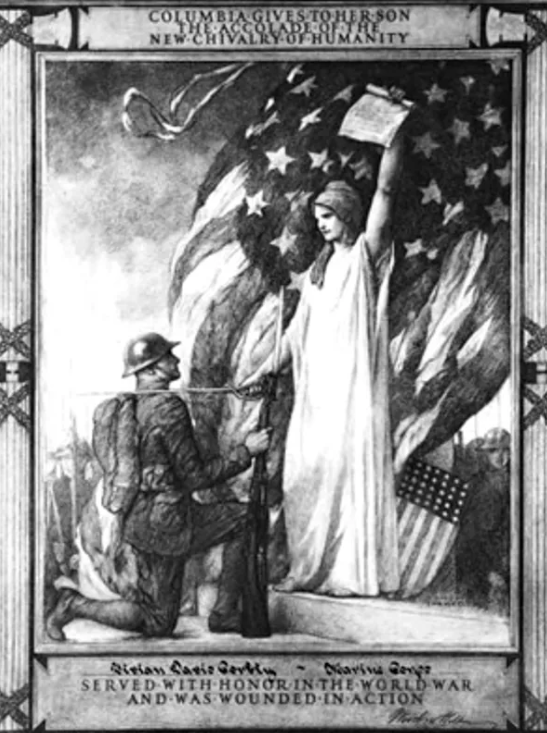
In the aftermath of World War I, disabled veterans in the United States found themselves seriously disadvantaged, with little governmental support. Many of these veterans were blind, deaf, or mentally ill when they returned from the frontlines. An astonishing 204,000 Americans in uniform were wounded during the war. The idea to form the Disabled American Veterans arose at a Christmas party in 1919 hosted by Cincinnati Superior Court Judge Robert Marx, a U.S. Army Captain and World War I veteran who had been injured in the Meuse-Argonne Offensive in November 1918. Although it had been functional for some months by that time, the Disabled American Veterans of the World War (DAVWW) was officially created on September 25, 1920, at its first National Caucus, in Hamilton County Memorial Hall in Cincinnati, Ohio. While touring across the U.S. as part of the election campaign of James M. Cox, Judge Marx publicized the new organization, which quickly expanded. It held its first national convention in Detroit, Michigan on June 27, 1921, at which time Marx was appointed the first national commander. In 1922, a women’s auxiliary organization was founded. The DAVWW continued working through the Great Depression to secure the welfare of disabled veterans, although their efforts were troubled by fundraising challenges and the desire of the public to put the World War behind them. In the midst of these troubled years, DAVWW was issued a federal charter by Congress, on June 17, 1932. The demands of World War II required the urgent expansion of the organization, which officially changed its name to Disabled American Veterans to recognize the impact of the new war.